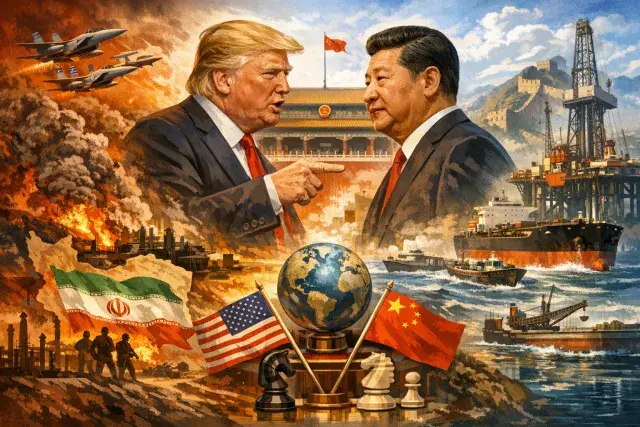
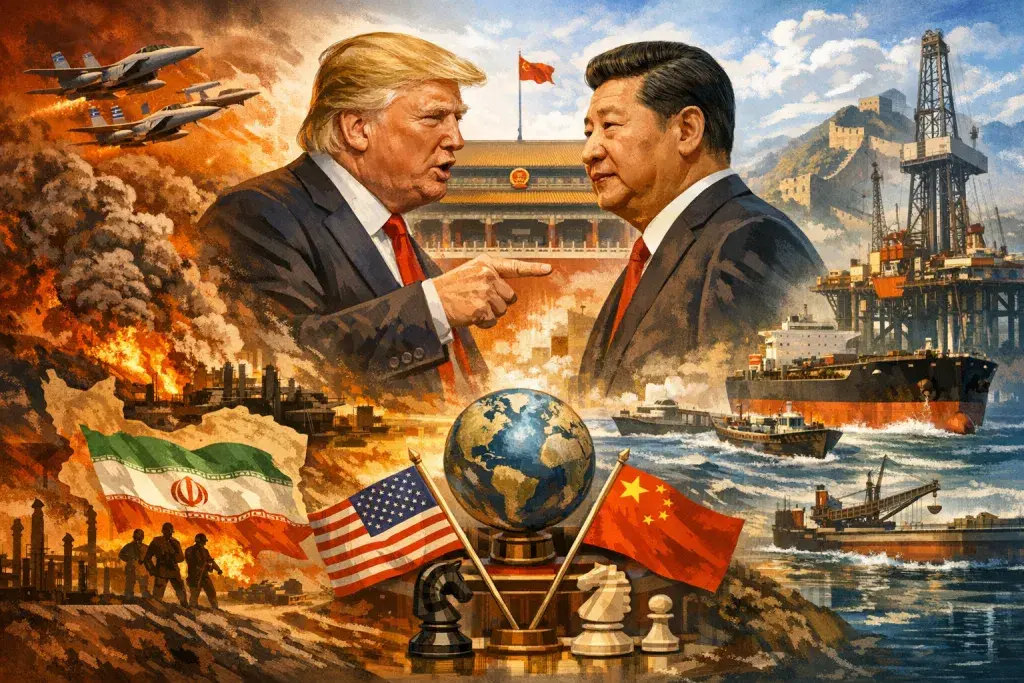
A rescheduled summit between U.S. President Donald Trump and Chinese President Xi Jinping is drawing renewed attention not only for what the two leaders may discuss, but for the volatile regional backdrop against which those discussions will unfold. The ongoing conflict involving Iran — and Washington's direct role in it — has already disrupted the original meeting timeline, and its reverberations are expected to follow Trump to Beijing. For two powers with competing interests across the Middle East, Asia, and global energy markets, the timing could hardly be more charged.
A Visit Delayed by Conflict, Now Carrying More Weight
The meeting was originally scheduled for an earlier date but was postponed after Trump's engagement in the Iran conflict demanded his presence elsewhere. White House sources indicated that while no formal conversation with Xi took place about the delay, the Chinese side was understood to have accepted the circumstances. That kind of tacit understanding is itself diplomatically meaningful — it signals a working relationship that can absorb disruption without fracturing.
The two leaders last met during the APEC summit in South Korea in October, and the May visit in China is intended as a continuation of that dialogue. A reciprocal engagement is also reportedly planned, with Xi and his wife Peng Liyuan expected to visit Washington later in the year. The symmetry of these arrangements reflects a deliberate effort to institutionalize high-level contact — to make dialogue a standing feature of the relationship rather than a crisis-response tool.
How the Iran Situation Shapes the Agenda
The conflict, initiated by a joint U.S.-Israel operation targeting Iran, has introduced significant turbulence into global energy markets. The Strait of Hormuz — through which a substantial share of the world's seaborne oil passes — has been subject to heightened risk, and any sustained disruption there affects major importers, China chief among them. Beijing relies heavily on Middle Eastern oil, which means Iranian instability is not a distant geopolitical abstraction for Chinese policymakers; it carries direct economic consequence.
This creates an unusual dynamic at the summit table. The United States and China enter the meeting with competing postures toward Iran — Washington having taken active military steps, Beijing having maintained economic ties with Tehran. Neither side is likely to yield its fundamental position, but both have reasons to keep the conversation open. For China, engagement with Washington offers leverage and information. For the United States, Chinese cooperation — or at minimum, Chinese restraint — on Iran matters for the effectiveness of any broader strategy.
The Broader Stakes of U.S.-China Dialogue
Trump and Xi's relationship has been one of the defining bilateral dynamics of recent years — combining elements of economic rivalry, strategic competition, and periodic diplomatic accommodation. Trade remains a persistent source of friction, as does Taiwan, technology transfer policy, and competing spheres of influence across Southeast Asia and beyond. Any summit must address these fault lines even when the stated agenda focuses elsewhere.
What makes the May visit notable is that it is proceeding at all. High-level diplomatic contact between Washington and Beijing has not always been a given — periods of acute tension have sometimes suspended it entirely. The fact that both sides are maintaining this schedule, even amid an active regional conflict involving a U.S. partner and a country with which China has significant ties, suggests a shared recognition that the alternative — no dialogue — carries its own risks.
What to Watch as the Summit Approaches
The outcomes of summits like this are rarely defined by formal communiqués. More often, the significance lies in what is said privately, what postures are moderated, and what channels are kept open for future communication. Observers will be watching whether the Iran situation is addressed directly in readouts from either side, and whether the meeting produces any language around energy stability or regional de-escalation.
Equally important is what does not happen: a breakdown in tone, a public disagreement that hardens into policy, or a cancellation driven by events on the ground. In a period when multiple global pressure points are active simultaneously, sustaining the diplomatic architecture between the world's two largest economies is itself a substantive achievement — one that both capitals appear, for now, to be committed to protecting.